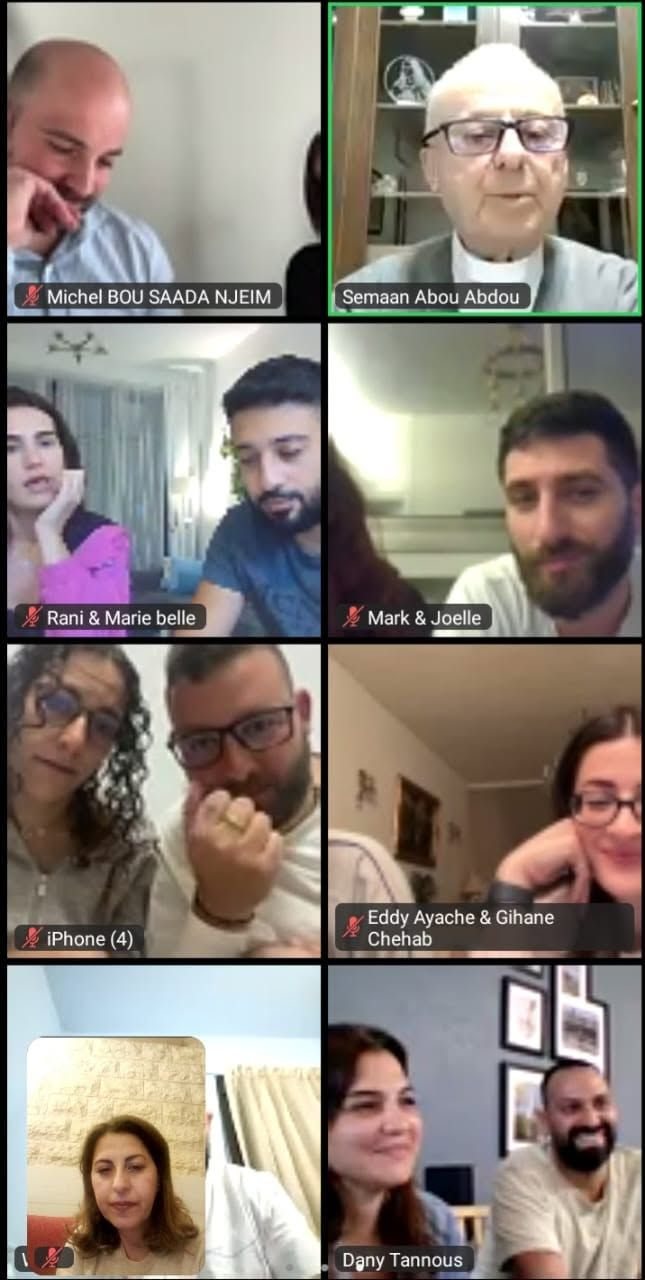
Held jointly with the Maronite Diocese of Sidon on Zoom, the 2025 course covered the liturgy of marriage, a couple's life testimony, the legal dimension of marriage and the emotional and relational side of married life.
Marriage preparation is one of the priorities of Metanoia Listening Center's work, because we believe in how important these courses are for young men and women preparing for marriage, so that they can enter married life ready to face the challenges ahead.
However, because few had registered, we contacted the Maronite Diocese of Sidon, after receiving the blessing of His Excellency Bishop Elie Bechara Haddad, Archbishop of the diocese. In keeping with the ongoing coordination between the two dioceses, it was agreed to merge the two courses on Zoom, following the program prepared by the Maronite Diocese.
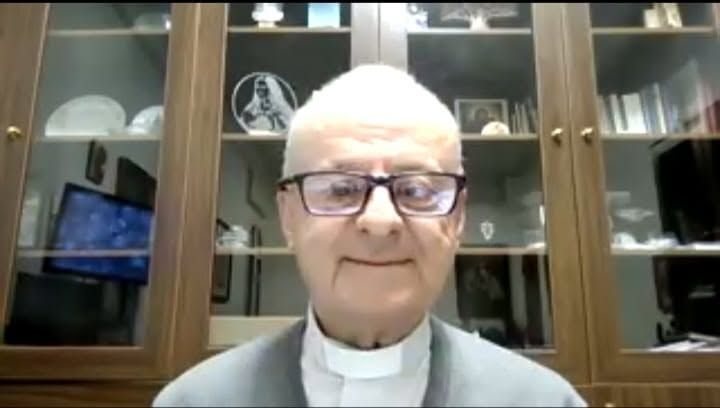
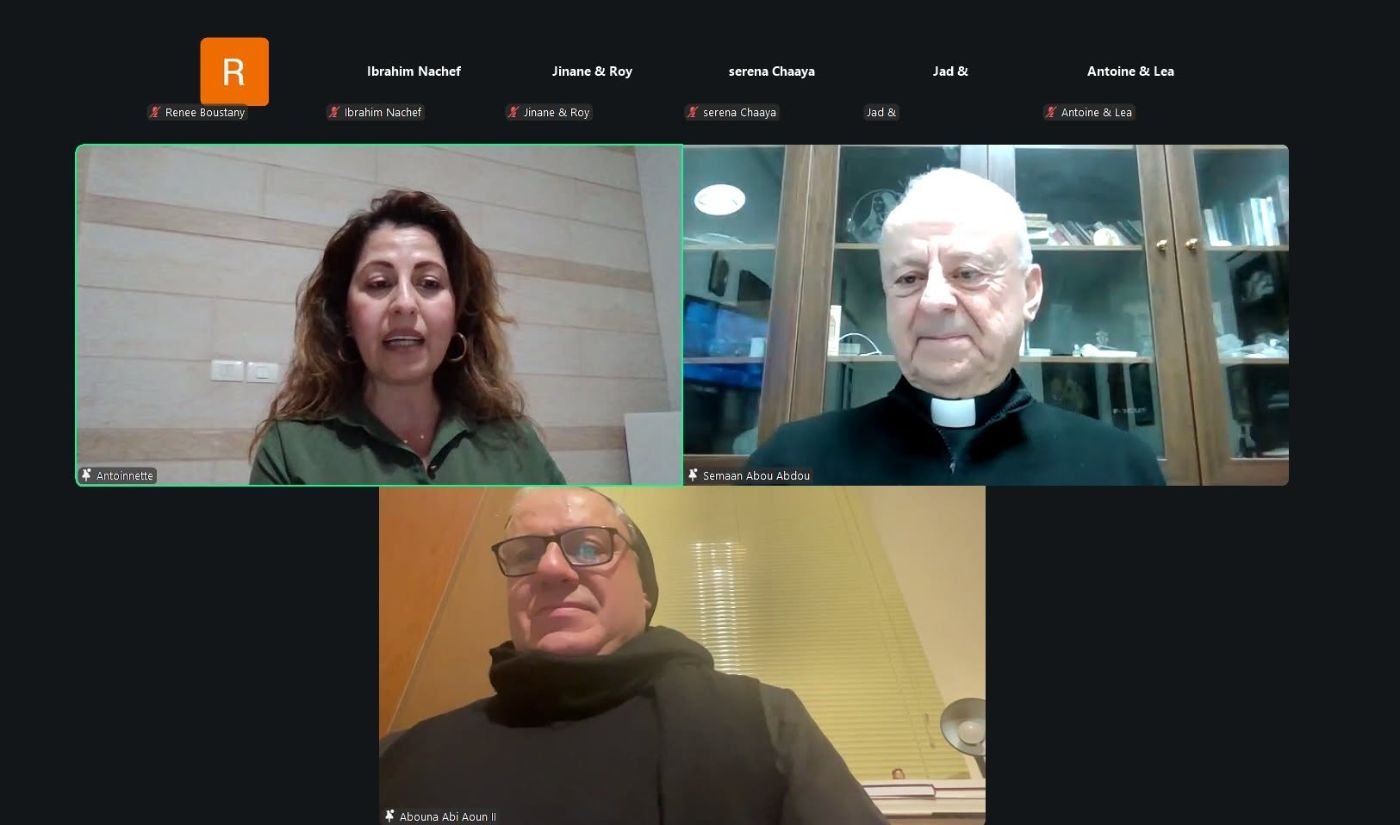
• The first session was with the Very Reverend Abbot Semaan Abou Abdo, coordinator of the pastoral care of marriage and family at Bkerké, family counselor and mediator, and general spiritual advisor of the Equipes Notre-Dame in Lebanon, under the title "The Liturgical Meanings of the Marriage Rite."
The Abbot explained the purpose and motivations of marriage: it is an adventure undertaken by three – the young man, the young woman and God. It is a covenant of love and life between a man and a woman before God and before people; the creation of a lifelong partnership for the good of the spouses; a communion of love and life; and a covenant with God that flows from Him and returns to Him.
He explained the features of marriage: mutual consent, unity and fidelity, permanence and indissolubility – the need for unity of mind, heart and body through a journey in which the spouses live faithfulness, values and solidarity throughout their lives, for "Christ and the Church are one." This permanence of marriage brings spiritual, psychological and physical stability to the life of the couple.
In the second part of the session, the Abbot explained the meanings of the crowning rite, which is divided into 11 parts, going through each one.
He concluded by emphasizing Pope Francis's three words – "thank you, sorry, please" – which families should repeat and live in order to have a happy married life.
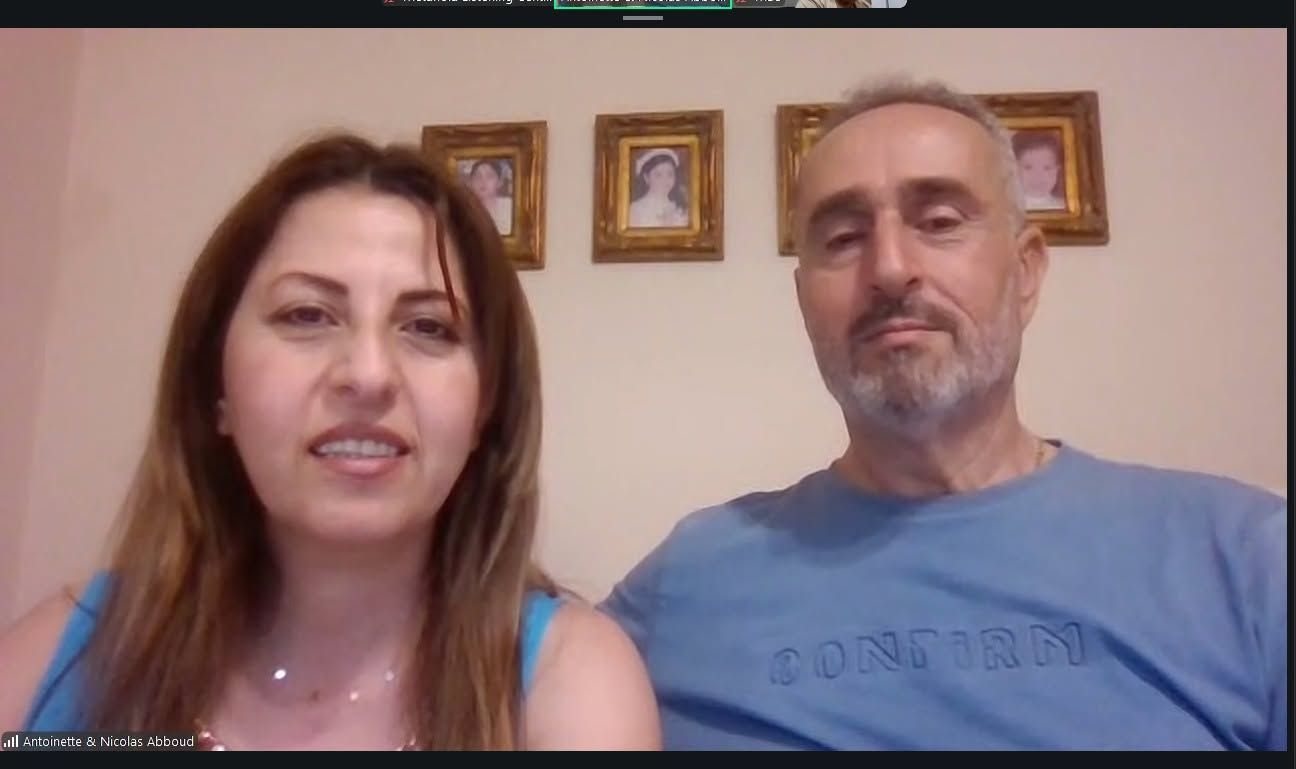
• The second session was a life testimony by a couple from the Family Committee of the Melkite Diocese of Sidon, Antoinette and Nicolas Abboud, under the title "The Family, a Domestic Church." They are committed members of the Equipes Notre-Dame (END) and have been married for 30 years. They testified to their way of living married life, starting with the first years of marriage and their challenges, and how they resolved conflicts between them without letting anyone else interfere.
They spoke about the great love that unites them and the importance of nourishing that love by expressing it and expressing each person's needs, so that the other can know what their spouse loves and prefers. They also spoke about partnership in the family, especially in raising children, passing on Christian values to them and sowing seeds of love and solidarity among them, and enriched their testimony with personal experiences.
They also spoke about the importance of families committing to Church movements, especially those that care for couples, because this helped them greatly on their journey and gave them their own way of life, based on walking together on the path of holiness by living according to the charter of the Equipes Notre-Dame.
They ended their testimony by highlighting the importance of marriage preparation, which happens once in a lifetime, while the maintenance of a marriage must be regular in order to preserve it and ensure it lasts.
"No family is perfect all at once; it requires gradual growth."
• The third session was with Monsignor Maroun Kiwan, Vicar General of the Maronite Diocese of Sidon, under the title "The Legal Aspect of Marriage." In the first part, Monsignor Kiwan explained two words: "covenant" and "contract."
A covenant is a strong agreement between God and humanity, from the Old Testament and then with Jesus Christ in the New Testament. The covenant between God and the spouses is expressed in the wedding rings: building a solid relationship within the covenant, founded on love, because a marriage built on reason without love remains incomplete.
A contract, on the other hand, is a legal procedure between two parties that guarantees the rights and duties of each. Many turn to civil marriage because divorce is easier in case of disagreement.
He spoke about the importance of a faith built on rock, because it is a fundamental pillar in building the institution of marriage – hence the importance of preparing for this step. Faith in God's presence allows us to receive the graces of this sacrament, which has biblical dimensions; these graces are God's strength, prayer, faith and the Word of God, through which couples can overcome every difficulty they may face. He also explained the importance of the content of the covenant, which is built on trust, dialogue and communication so that it can last and be strong; when these qualities are missing, each person lives as if alone. He stressed that the "yes" spoken before the altar is a yes to the permanence of marriage, and explained at length everything that "yes" contains.
In the second part, he spoke about the legal aspect and the procedures required before and during the wedding, and about the documents required: a certificate of free status, the baptism certificate, medical tests and a certificate of attendance at the marriage preparation course.
He also explained that the word "divorce" is not used in the Christian faith; instead there is a "declaration of nullity," granted when there are valid grounds, whereas in civil marriage divorce can happen without such grounds.
At the end of the session he wished the engaged couples every success and concluded: "Marriage is an institution, a complete partnership of life."
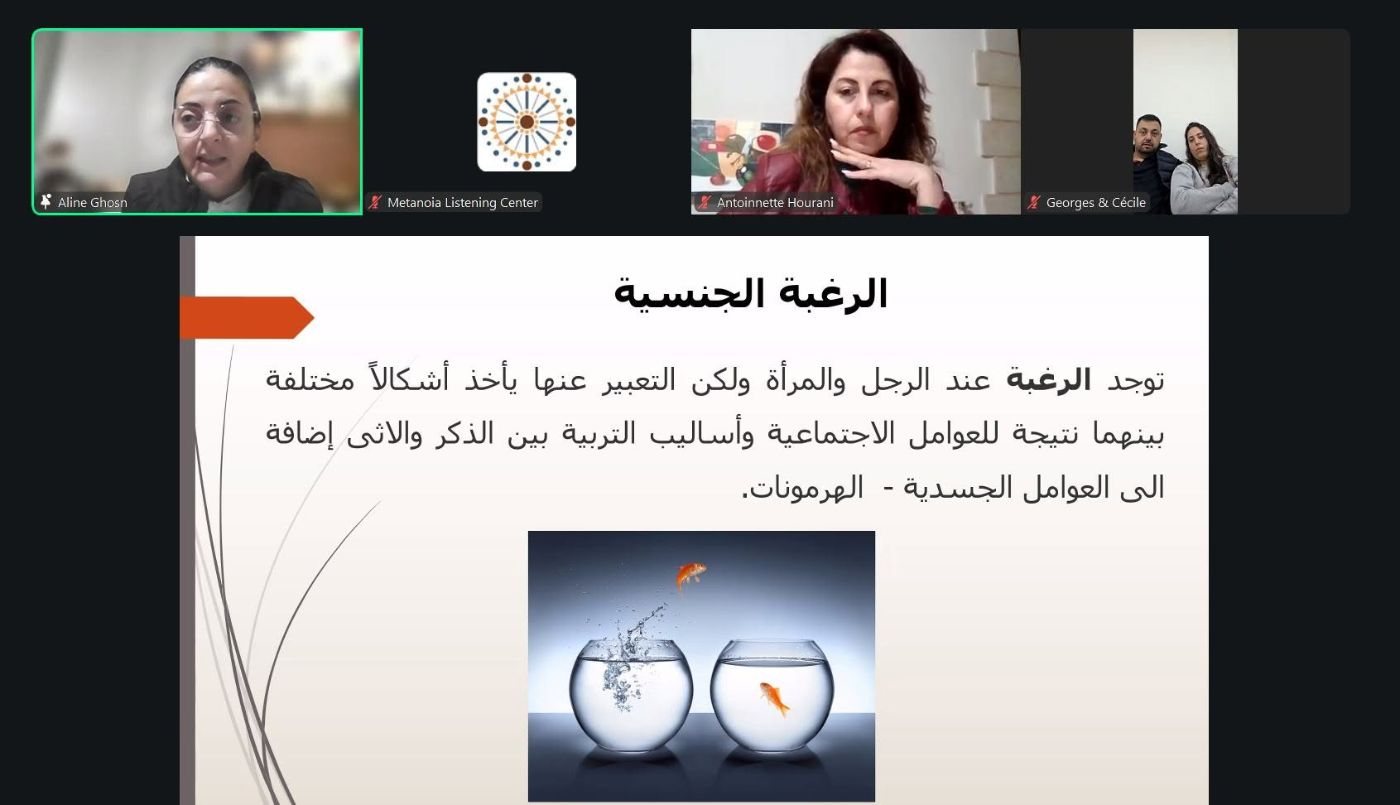
• The fourth and final session was with Dr. Aline Ghosn, under the title "Married Life in Its Emotional and Relational Dimensions."
Dr. Ghosn began her talk by highlighting the importance of the sexual relationship in married life from medical, psychological and spiritual perspectives: "The act of love with one's spouse is a sacred reality that lives on forever, and sexuality completes this relationship; therefore it is sacred." She stressed the importance of dialogue and honesty between spouses in all things, especially in intimacy.
She also explained, in scientific detail, the differences between the physical makeup of women and men, which go together with psychological characteristics. In the second part she spoke about sexual difficulties in both spouses, explained the conditions for a fulfilling intimate relationship, and gave them advice for preserving it.
At the end of the course, those responsible for the Family Committee of the Maronite Diocese of Sidon, represented by Father Joseph Abi Aoun, superior of the Monastery of Our Lady of the Hill in Deir El-Qamar, and those responsible for the Family Committee of the Melkite Diocese of Sidon and Metanoia Listening Center wished the engaged couples who took part happiness and success in their married life and their new journey, and placed themselves and their centers at the service of these future families, ready to welcome and support them.